Posts

The Basics

There are things we all take for granted and assume to be basic, shared cultural knowledge. The sun rises in the... east. Water flows... downhill. Fires are... hot. When giving presentations on library resources, I don't want to spend valuable time discussing what everyone already knows. The problem, as it turns out, is what we in library land assume to be basic, shared knowledge is not always shared as widely as we think. Case in point: I was recently hanging out with family and friends as we watched the super blood harvest moon lunar eclipse a few nights ago. The particular friend I was sitting next to as we sipped our beer and watched the moon do its thing is the president of a company headquartered in Florida but with production plants all over the country. As his position dictates, he spends a fair amount of time traveling. Also, as his position dictates, he's an audiobook fan. Seeing a seamless sales opportunity, I gave him the full rundown on our downloadable audiobo...

Some inspiration

Image
In Spokane's weekly alternative news publication, the Inlander, they do a number of awesome things.  One of the things they do is a weekly "Random Joe on the Street" type of survey where they ask a question on some given issue and record the responses.  Here is the column from 3/2/12: It's not Kassie's or Luke's or Dixie's or Heather's fault that they are off base.  It's mine.  More work to be done.

Crisis? What crisis?

Fine.  I agree that public libraries have been taking some pretty wicked shots to the chin for quite a while now.  We all know the litany of issues: decreased funding, increased number of formats to purchase, publishers being squirrely about granting us access to their content... and so on. All true.  All relevant. And nowhere close to being the full picture. Just last night a colleague from a neighboring library system and I did a presentation on library business resources for an entrepreneur/business plan class hosted by the local Chamber of Commerce.  To a chorus of many oohs and ahhs, we covered the content that we originally planned to cover. Comments ranged from "This is the best night of my life" to "I loooove the library" to "Who knew?!?" to "Get out!!!".  And then they wouldn't let us leave the room.  Beyond the library's straight up business resources they wanted to know about our ebooks. About our downloadable audiobooks....

Thanks!

A quick shout out to the folks at the Washington State Library for hosting me this morning for a First Tuesday session. If you'd like to watch the 1 hour presentation at your leisure, go ahead and link to it here . Thanks again!
Image
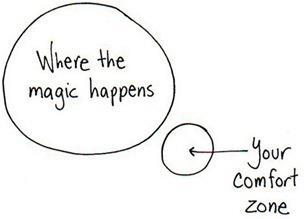
This pretty much sums it up.  If you find yourself sitting comfortably at your desk, day in and day out, you're missing out.

Being big

Image
Although I have absolutely no scientific data to back me up on this assertion, I'm guessing that one of the top 10 reasons that librarians don't spend more time engaging with the public is the fear of being out in the public.  Kind of a weird trait for a public librarian to have, but there it is. So how do you work around that?  How do you get comfortable with being uncomfortable?  For starters, give this a try: http://www.ted.com/talks/amy_cuddy_your_body_language_shapes_who_you_are.html

New York's Best Kept Secret for Entrepreneurs?

The Atlantic magazine says this is it ( http://www.theatlantic.com/sponsored/bank-of-america/archive/2012/09/new-yorks-best-kept-secret-for-entrepreneurs/262197 ) but I'm guessing that the NYPL could give the Field Center a run for its money.
A site of note: http://www.growinglocaleconomies.com/   A ton of great resources here for anyone in libraryland looking for ways to integrate their public library into the local business scene.

Required viewing

Image
If you haven't seen this and you have a love of public libraries, take a few minutes out of your day and watch this: http://www.youtube.com/watch?v=KqAwj5ssU2c

All in

I'm a rookie Texas Hold 'em player but I love, love, love the game.  One strategy that I have learned over the years: if you have the nuts (poker slang for an unbeatable hand), you should generally go all in.  All the chips go into the center of the table.  If people want to stay in the game, it's going to cost them.  If they want to fold and walk away, leaving me with the smaller win, fine.  I'll take it. Either way, when you're sitting on the nuts that is not the time to hold anything back. Poker to library/business reference transition... In terms of the information world, the library has the nuts in terms of the best model out there to deliver high-quality content to our communities.  It's time we started acting like it.  It's time we started looking around at the best business libraries out there ( http://businesslibrary.uflib.ufl.edu/businesslibraries and http://businesslibrary.uflib.ufl.edu/bestdatabases seem to be good places to start) ...

Prezi for the WLA-ers

Hey WLAers! Thanks for being such a rocking, inquisitive audience.  Here's the link to the Prezi portion of the presentation: http://prezi.com/ks65tb54zgrb/wla-presentation/ Stay in touch and let me know how your business outreach efforts go!

WLA

At the WLA conference .  Gonna be preachin' it to the choir tomorrow. 

Competion

Here's a word of warning about doing library outreach to the business community.  Well, not so much a warning but rather a tip.  Something to be aware of. Here it is: After a certain period of doing outreach to the business community (about five years in my case), you might start wondering why, if the library's business resources are met with such universal appeal and acclaim, why are there still large swaths of the business community that don't know about the power and versatility of our resources?  I think I have an answer, or at least a partial answer.  Competition. If I show the commercial lenders at one bank in town our market research database, allowing them to save time and money when it comes time to performing due diligence in making a business loan, that information spreads like wildfire... right up to the doors of that particular bank.  Once the news makes its rounds within an single institution, there is no incentive for Bank ABC to share their n...

You gotta show up

Image
At the risk of coming across as a Seth Godin lackey, I do have to share a recent video of his.  He's not specifically talking about libraries but the connections are too strong to be ignored.

The way forward. And the way backward.

In library land (as well as many other lands, most likely) we tend to spend a lot of time thinking about the one big thing that will blow things wide open.  We'll make that perfect presentation to just the right person and adequate library funding will be secured indefinitely.  We'll roll out the perfect service or resource and the City Council and Mayor will be lining up outside our doors to offer us additional revenue. And when we aren't thinking these grand thoughts, we're thinking just the opposite: the sky is going to fall.  The apocalypse is nigh.  We're cutting the budget to the point where we just won't be a viable organization.  We're underfunded.  We're overworked.  We aren't appreciated. But here's the thing: neither of those two scenarios are likely.  Instead, it is one small step at a time.  If we satisfy one library member with one interaction then we are one step closer to remaining and/or becoming a valued asset in our com...

Keepin' it real...

When I give a presentation to a group of business folks I usually have about 30 - 45 minutes for my spiel. Here are the points/resources I try to cover: Local human librarians vs. Google ReferenceUSA DemographicsNow General OneFile Often the presentation is at some sort of a networking event so try to pay attention to the make up of the audience before your presentation.  I just spoke today to a group that included a man who is at the beginning stages of putting together a business plan for an indoor shooting range.  Interesting.  When it was my turn with the microphone I used ReferenceUSA and showed the group how he could pull together a list of all the shooting ranges in Washington State so he can instantly know who his competition -- and potential collaborators -- might be.  That's a good thing to know when it comes to guns.  Using DemographicsNow I then showed how to round up the demographics around other successful shooting rangers and compare the...

Magic

Those of us who inhabit the library world on a day-to-day basis sometimes need to look at what we do in a fresh light. When we run a search on ReferenceUSA and within 30 seconds pull up a list of the 46 Spokane County female-owned manufacturing businesses without websites, well, that's all in a day's work for us. No biggie. But to the public that is straight up, hardcore magic. That's the equivalent of pulling four doves out of a handkerchief and having them explode into $100 bills. The moral? Don't let our complacency with what we do color how the public views what we do.

Outreach tip #47

If you have ventured out into the community to do presentations/speaking engagements, here's a suggestion: keep a spreadsheet listing the contact information for each group. When a year rolls by, send them a quick note letting them know that you'd be happy to come speak with their group again and show off all the cool new things that your library has implemented in the past year. Wish I'd thought of that sooner than right now.

Sharing

It's what libraries do. We buy something and then we share it. Pretty simple, really. But why oh why are we so clumsy when it comes to sharing with other libraries? Sure, we've got our Interlibrary Loan program which certainly rocks. Within the span of just a few days, I can have delivered to my hands pretty much any book or journal article I could desire. That's amazing. But what about our subscription databases? Yeah, yeah. Our contracts prevent us from allowing "non-authorized" users access to our databases. The price we pay is largely dependent upon use and/or population area served. But can't we be a little more creative than that? At the very least, every library in the state (academic or public) should have an option to purchase a "non-resident" library card that would then grant access to that institution's electronic resources. With constrained budgets, that would mean that the smallest library could pony up ~$50/year to p...

Gathering what is scarce

When Ben Franklin started up The Library Company of Philadelphia, books were scarce and expensive. Franklin's flash of inspiration was figuring out how to make them accessible and inexpensive. And thus, the idea of the public library was born. Fast forward 280 years. Information is no longer scarce or expensive. What is scarce and expensive is compiled, indexed, findable, useful, high-quality information and having someone know where to find it. The days of libraries putting a book on the shelf and having that provide enough of a value to our community to justify our existence is over. We still need the book, yes, and at the same time we need to show our communities what is truly scarce and how libraries are the best model out there for managing scarcity, be it 18th century scientific tracts or 21st century databases.